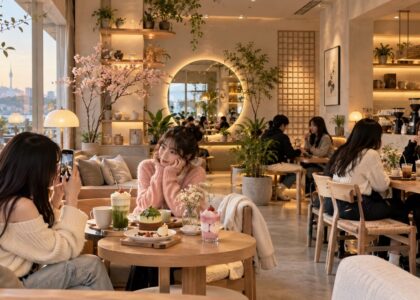
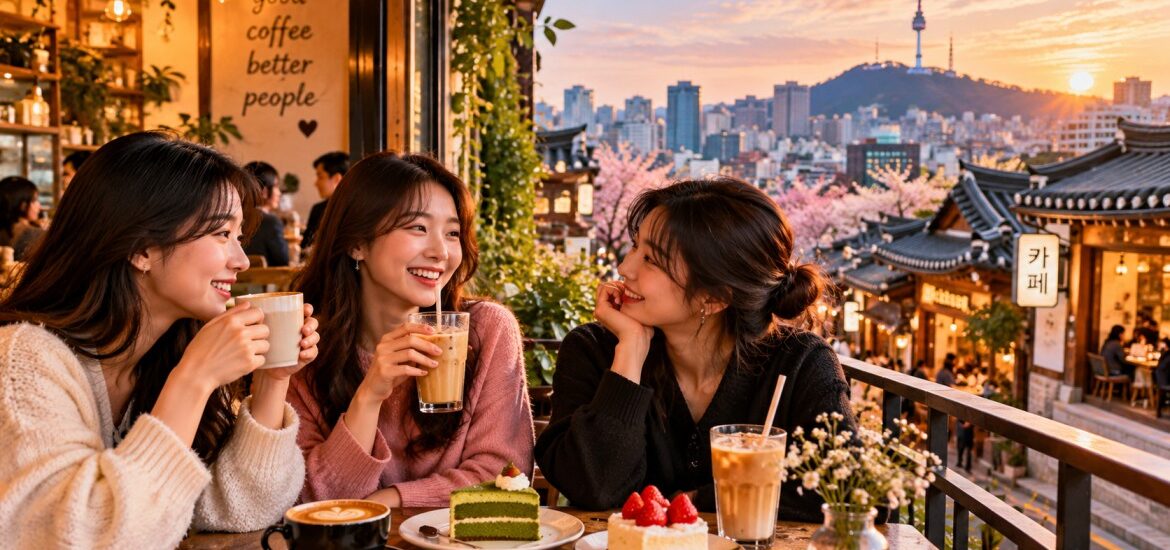
Walk through almost any busy neighbourhood in Seoul and cafés quickly become part of the landscape. Some are tiny specialty coffee bars, others occupy several floors, while many are designed around books, art, desserts, plants, music or a single visual concept. This variety is one reason Seoul cafe culture feels less like a simple coffee habit and more like a lifestyle.
For young Koreans, students, office workers, couples and travellers, cafés can be places to meet, study, work, take photographs, discover desserts or simply slow down between activities. Seoul cafe culture has also become highly visible through K-dramas, K-pop content and social media, making the café experience one of the most recognisable parts of modern Korean urban life.
For Indian audiences discovering Korea through entertainment, this culture offers another way to understand everyday Korean life beyond concerts and television.
What Makes Seoul Café Culture So Distinctive?
Coffee is now deeply embedded in everyday life in South Korea. In 2026, Korea’s Ministry of Agriculture, Food and Rural Affairs reported that the country had 106,452 coffee shops in 2023, accounting for roughly 13.4% of all foodservice establishments. The Korean coffee market had also grown substantially compared with 2018.
But Seoul cafe culture is not defined only by the number of cafés. What makes it interesting is the variety of experiences available within a relatively small area. One café may focus on carefully roasted beans; another may become popular for desserts, architecture, traditional Korean ingredients or a photogenic rooftop.
The Seoul Metropolitan Government has long highlighted café streets such as Yeonnam-dong, where converted homes and independent concepts helped establish a distinctive Korean cafe culture.
In 2026, Seoul went even further by introducing a dedicated 50 Cafés & Desserts in Seoul selection as part of its culinary programme, reflecting a tourism trend in which people want to enjoy not only food but also coffee, desserts, neighbourhoods and atmosphere.
Why Café Hopping Became Part of the Seoul Lifestyle
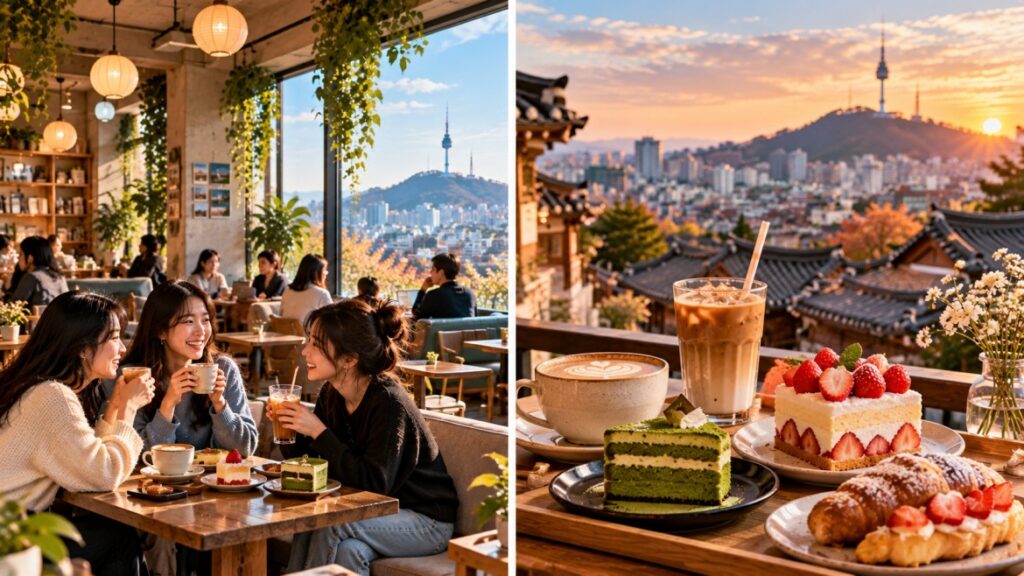
The idea behind cafe hopping in Seoul is simple: instead of spending an entire day at one place, people can visit several cafés, choosing each one for a different drink, dessert, mood or experience.
A weekend might include lunch, a specialty coffee stop, a walk through a neighbourhood, another café for dessert and an evening meeting with friends.
Because different districts have their own personalities, cafés also become a way to explore the city itself.
That helps explain why Seoul cafe culture works so naturally in neighbourhoods known for art, shopping, food and youth culture. Visitors are not simply searching for caffeine. They are exploring architecture, design, streets, stores and social spaces at the same time.
For travellers asking why cafe hopping is popular in Seoul, the answer lies in this combination of convenience, variety and discovery.
A Café Can Be a Social Space, Office and Study Room
One of the most interesting parts of Korean coffee culture is how many roles the same café can play during one day.
In the morning, someone might stop for takeaway coffee before work. During the afternoon, students may arrive with books and laptops. Later, friends or couples can meet for dessert and conversation.
Korea’s Ministry of Culture, Sports and Tourism has highlighted the expression “kagongjok,” referring to people who study in cafés. The ministry also notes that Korean cafés are increasingly evolving into platforms for community activities, including book readings, music listening and brand events.
That flexibility is central to Seoul cafe culture.
Sometimes people visit primarily because of the coffee. At other times, they choose the café because it provides the right atmosphere for studying, talking, relaxing or spending time alone.
Design Is Part of the Experience
Visitors to Seoul often notice how carefully cafés treat interior design.
A minimalist Korean cafe may use concrete, neutral colours, wood and natural light, while another space might deliberately feel retro, artistic, futuristic or traditionally Korean.
The experience can extend to cups, trays, furniture, packaging, menus and even the way desserts are plated.
Social media has made these details more visible. A distinctive café interior can travel far beyond Seoul through Instagram, YouTube Shorts, Pinterest and travel content.
This does not mean every café exists only for photographs. Instead, Seoul cafe culture demonstrates how architecture, food and atmosphere can work together to create something memorable.
K-Dramas and K-Pop Made Café Life Familiar Worldwide
Many international fans encounter Korean café life before they ever visit Korea.
K-drama characters regularly meet inside cafés for dates, conversations, study sessions and work meetings. Idols film casual content in cafés, recommend drinks or take part in pop-up collaborations.
These everyday scenes gradually make Korean cafés feel familiar to audiences around the world.
That familiarity has helped Seoul cafe culture move beyond Korea.
Fans increasingly become interested not only in Korean music and dramas but also in the lifestyle surrounding them: convenience stores, skincare, street food, fashion and café experiences.
A Korean coffee shop aesthetic can therefore carry cultural meaning. For an Indian K-drama fan, enjoying Korean food or drinks in a Seoul-inspired setting can turn something previously experienced through a screen into something real.
How Korean Cafés and Stores Are Bringing the Experience to India
Korean cafés and stores in India are playing an important role in turning online interest into offline discovery.
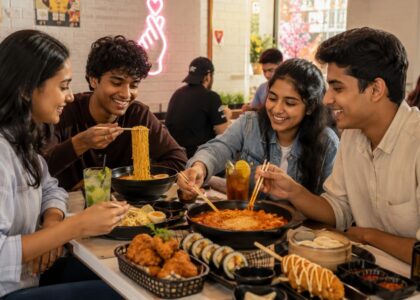
Specialty stores make Korean noodles, snacks, beverages, beauty products and lifestyle items easier to find. Cafés make the experience more social because customers can try Korean dishes while spending time with friends.
This matters because culture often spreads through everyday experiences.
Someone watching a K-drama may become curious about ramyeon. A K-pop fan may attend an event and later try Korean food with friends. Someone discovering Korean snacks might eventually become interested in the country’s broader food traditions.
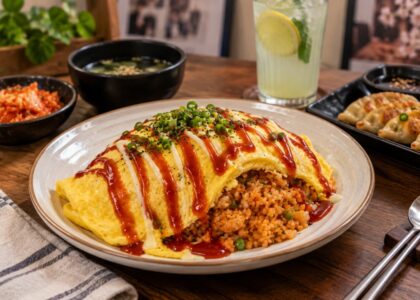
At Wang House, that connection can happen through Korean street food and a casual café environment. The goal is not to copy Seoul exactly, but to make Korean food and contemporary café culture approachable for Indian customers.
That same idea is part of what makes Seoul cafe culture so influential: food, environment and social interaction come together in one experience.
Upcoming Korean Events in India
Interest in Korean culture is also becoming increasingly visible through screenings, festivals and major fan events across India.
BTS World Tour Arirang Live Viewing — 31 October 2026
Indian BTS fans can watch the delayed live viewing of BTS World Tour Arirang in São Paulo on 31 October 2026.
Current cinema listings include screenings across Delhi-NCR, including Cinepolis V3S East Center near Nirman Vihar and Cinepolis Pacific NSP2 in Pitampura.
Events like this show how online fandom is becoming a physical community. Instead of watching performances alone, fans can meet, celebrate and spend time together before or after screenings.
This is also where cafés can play a role, providing casual gathering places around Korean-culture events.
Hello Korea — Pune, 28–29 November 2026
Hello Korea is scheduled for 28 and 29 November 2026 at KOPA Mall in Pune.
The event is promoted as a celebration of Korean pop culture featuring K-food, K-fashion, K-brands, K-drama, K-dance and immersive cultural experiences.
Events like Hello Korea support the same cultural curiosity that drives Seoul cafe culture. Someone may attend for music but leave interested in Korean food, fashion, products or everyday lifestyle.
Weverse Con Festival India — New Delhi, 27–28 March 2027
A much larger milestone is the first Weverse Con Festival India, scheduled for 27 and 28 March 2027 at the Outdoor Expo Site, Yashobhoomi, New Delhi.
The official lineup includes ENHYPEN, TOMORROW X TOGETHER, LE SSERAFIM, Hwasa, Eric Nam, BUMZU, Dayoung, Lee Hyun, Lara of KATSEYE and several Indian and global performers.
BookMyShow confirms the two-day New Delhi festival, while general ticket sales opened on 30 October 2026.
It will mark the first Weverse Con Festival held outside Korea, showing how significantly India’s K-pop audience has grown.
Why Cafés Matter Between Major Events
Large festivals create excitement for a few days, but cafés can keep communities connected throughout the year.
Fans can meet before screenings, discuss dramas, celebrate idol birthdays, exchange merchandise or simply share Korean food.
These smaller interactions are important because they turn cultural interest into relationships and communities.
This is another reason Seoul cafe culture is worth understanding. Successful cafés often become meaningful because of how people use them, not simply because of what they sell.
For travellers researching the best Seoul cafe culture experiences for tourists, the most memorable places are often those that combine neighbourhood character, distinctive food or drinks and an atmosphere that encourages visitors to stay and explore.
What Indian Cafés Can Learn from Seoul
Indian café owners do not need to recreate Korea to learn from Seoul.
The strongest lesson is having a clear experience.
A café should know what customers are expected to remember: perhaps a signature dish, an unusual interior, a calm study environment, a community activity or simply an enjoyable social dining experience.
Businesses inspired by Seoul cafe culture can focus on consistency rather than expensive decoration. Good lighting, thoughtful seating, attractive food presentation and a recognisable identity often create more impact than filling every wall with unrelated décor.
The second lesson is community.
Seoul’s cafés show that customers return when a place fits naturally into their lifestyle.
Final Thoughts
Seoul cafe culture has become an important part of Korean lifestyle because cafés have evolved far beyond places that simply serve coffee.
They function as social spaces, study rooms, dessert destinations, design experiences and neighbourhood landmarks.
That combination explains why café hopping feels so natural in Seoul and why the experience continues to attract international travellers.
As Korean entertainment, food and cultural events grow in India, cafés and Korean stores can play a similar connecting role. They give fans somewhere to experience Korean culture between large events and turn online curiosity into something social and tangible.
For Wang House, the opportunity goes beyond serving Korean dishes. By creating a welcoming environment where people can eat, meet and connect with Korean culture, a café becomes part of the same lifestyle story that has helped Seoul cafe culture become recognised around the world.