Korean food is often associated with fried chicken, barbecue and seafood, but that is only one side of the cuisine.
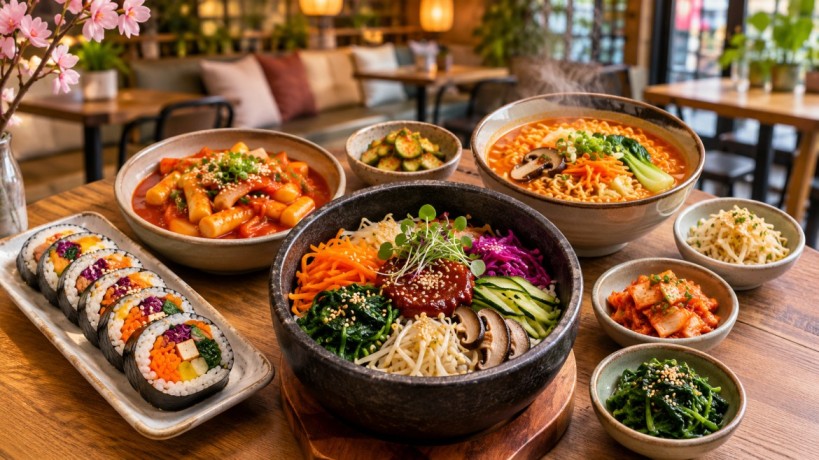
For vegetarian diners, Korean vegetarian food can offer colourful rice bowls, spicy rice cakes, noodles, vegetable-filled gimbap, pancakes, pickled sides and several café-style dishes that make exploring K-food much easier than many first-time diners expect.
For Indian customers, this is particularly relevant. A large vegetarian audience is curious about Korean culture through K-dramas, K-pop and social media but may hesitate before visiting a Korean café because they are unsure what they can actually eat.
The good news is that vegetarian-friendly Korean dishes do exist, and Korean cafés in India are increasingly making these choices easier to understand.
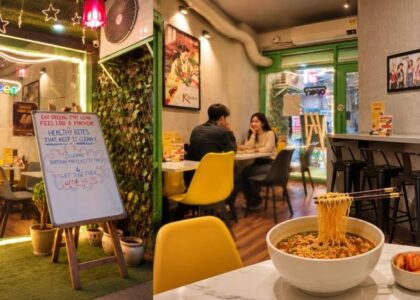
At Wang House Korean Street Food Café, diners can explore Korean flavours through vegetarian menu options alongside the wider Korean street-food experience.
So, what should a vegetarian K-food lover actually try?
Is Korean Food Vegetarian-Friendly?
Yes—but there is an important detail.
Many Korean dishes are built around vegetables, rice, noodles, tofu, mushrooms and fermented ingredients. However, a dish that looks vegetarian may sometimes contain fish sauce, seafood seasoning, meat stock or egg.
Korea Tourism Organization’s guide for vegetarian travellers advises vegetarian visitors to confirm ingredients because items such as soups, stews, bibimbap and even vegetable gimbap can vary from restaurant to restaurant.
That distinction is especially important when travelling in Korea.
In India, restaurants that clearly identify vegetarian versions can make the ordering process simpler. Still, diners with strict vegetarian, vegan or allergy-related requirements should always confirm sauces, broths and preparation directly with the café.
Once that is clear, there is a surprisingly wide world of Korean vegetarian food to explore.
1. Veg Bibimbap – A Colourful Korean Rice Bowl
Bibimbap is one of the easiest Korean dishes to recommend to someone trying Korean cuisine for the first time.
The basic idea is beautifully simple: rice topped with individually prepared vegetables and Korean chilli paste, mixed together before eating.
A vegetarian version may feature vegetables such as carrots, spinach, cucumber, mushrooms, bean sprouts and other seasonal ingredients.
At Wang House, Veg Bibimbap is listed as a sticky rice bowl served with vegetables and Korean red chilli paste.
The dish works particularly well for Indian vegetarian diners because rice already feels familiar while the vegetables, sesame flavours and Korean seasoning make the experience completely different.
If you want to understand the dish in more detail, read the Wang House guide to Korean Bibimbap in Delhi and Kerala.
2. Veg Gimbap – Easy to Share and Easy to Love
Gimbap is another approachable choice.
It consists of rice and fillings rolled inside seaweed and sliced into bite-sized pieces.
Traditional Korean gimbap can contain egg, ham, tuna or other non-vegetarian ingredients, which is why checking the filling matters.
A vegetarian version keeps the focus on rice and vegetables.
At Wang House, Veg Mini Gimbap is made with sticky rice and vegetables wrapped in Korean seaweed.
It works particularly well as a sharing dish, a light snack or something to order alongside ramen.
For people who are still getting comfortable with Korean flavours, veg gimbap can be one of the simplest starting points.
3. Veg Tteokbokki – For People Who Love Spicy Food
If you enjoy spice, tteokbokki should be high on your list.
Tteokbokki is made using chewy Korean rice cakes cooked in a bold red sauce.
The texture is what surprises most first-time diners. Korean rice cakes are soft and chewy rather than crispy, making them very different from Indian rice-based snacks.
Wang House lists a Veg Tteokbokki made with rice cakes, vegetables and red chilli paste.
It can be a good choice for vegetarians who want something more adventurous than a rice bowl.
The dish is also strongly associated with Korean street-food culture, so it gives diners a taste of the foods they frequently see in Korean dramas and online videos.
4. Veg Rabokki – When Ramen Meets Tteokbokki
What happens when you combine Korean ramen and tteokbokki?
You get rabokki.
The dish brings together noodles and chewy rice cakes in a Korean-style red chilli sauce.
For someone who cannot decide between noodles and tteokbokki, this is an easy answer.
Wang House’s Veg Rabokki combines rice cakes, ramen and vegetables with red chilli paste.
It is richer and more filling than regular tteokbokki, making it suitable when you want something closer to a complete meal.
Among Korean vegetarian food options, rabokki is especially appealing to people who already enjoy spicy instant noodles.
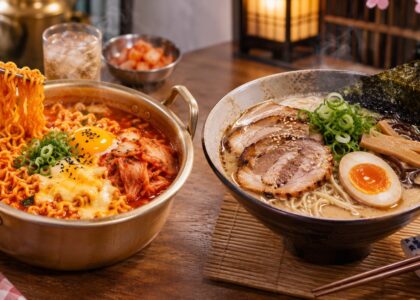
5. Spicy Veg Ramen
Ramen is often one of the first Korean foods Indian diners want to try.
A steaming bowl of noodles feels familiar from K-dramas, K-pop content and Korean convenience-store videos.
Wang House currently lists Spicy Veg Ramen as a vegetarian menu option.
For first-time customers, veg ramen can provide an easy introduction to Korean-style noodle flavours without immediately choosing meat-based toppings.
Pair it with veg gimbap or another snack and you have a classic Korean café-style combination.
You can explore the available vegetarian and non-vegetarian dishes on the official Wang House Korean food menu.
6. Kimchi Veg Ramen
Kimchi and ramen are two of the foods most strongly associated with everyday Korean eating culture.
Combining them creates a tangy, spicy noodle bowl with a stronger fermented flavour than regular ramen.
Wang House currently lists Kimchi Veg Ramen among its vegetarian-labelled ramen choices.
However, kimchi deserves a special note.
Traditional Korean kimchi can sometimes use fish sauce or seafood-derived ingredients during fermentation. Strict vegetarians and vegans should therefore confirm the preparation used by the individual restaurant rather than assuming every kimchi everywhere is vegetarian.
This is a useful habit whenever exploring Korean vegetarian food outside your usual restaurant.
What About Korean Side Dishes?
Korean meals frequently come with small side dishes known as banchan.
Some can be naturally vegetable-based, such as pickled radish, seasoned greens or cucumber preparations.
Others may contain fish sauce, seafood or other ingredients that are not obvious from appearance.
The safest approach is simple: ask.
This does not make Korean cuisine difficult for vegetarians; it simply means that preparation matters.
Korean cuisine uses vegetables extensively. Korea Tourism Organization’s article on Korean vegetable dishes highlights the variety of flavours and cooking techniques created using vegetables, tofu, grains and other plant-focused ingredients.
What Is Korean Temple Food?
Anyone seriously interested in vegetarian Korean cuisine should also know about Korean temple food.
This Buddhist culinary tradition is strongly plant-focused and traditionally avoids meat and fish.
Instead, it uses vegetables, tofu, mushrooms, grains, fermented ingredients and seasonal produce to create meals with surprisingly diverse flavours.
Temple cuisine also demonstrates an important point: Korean food does not depend entirely on meat to create complexity.
Although a casual Korean street-food café and traditional temple cuisine are very different experiences, both show how vegetables, rice and fermentation can play a major role in Korean food culture.
Korean Vegetarian Food in Delhi
Vegetarian diners searching for Korean vegetarian food in Delhi now have more opportunities to explore K-food locally.
Wang House currently operates cafés in both East Delhi and West Delhi.
That means customers do not necessarily need to travel across the entire city just to try Korean food.
The Wang House café locations include Laxmi Nagar and NSP/Pitampura in Delhi, along with locations in Kerala.
For groups where some people eat vegetarian food and others do not, a Korean café with both types of options can also make planning easier.
Korean Vegetarian Food in Laxmi Nagar and East Delhi
For diners around Laxmi Nagar, Nirman Vihar, Preet Vihar, Karkardooma, Patparganj and East Delhi, Wang House’s Laxmi Nagar café provides access to Korean street food close to Laxmi Nagar Metro.
Vegetarian customers can explore dishes such as veg ramen, veg tteokbokki, veg rabokki, veg gimbap and veg bibimbap according to the current menu.
This makes it easier for a group of friends to visit even when everyone has different food preferences.
It can also be a useful starting point for someone who has been watching K-dramas for years but has never actually tried Korean food.
Korean Vegetarian Food in NSP and Pitampura
West Delhi customers can explore similar options at Wang House in NSP, Pitampura.
The café is near Netaji Subhash Place Metro, making it relevant for diners around Pitampura, Rohini, Shalimar Bagh, Kohat Enclave, NSP and nearby West Delhi areas.
For someone trying vegetarian Korean food for the first time, consider ordering a combination rather than only one dish.
Veg gimbap can be shared.
Veg tteokbokki adds spice.
Bibimbap gives you a rice-based meal.
Ramen delivers the comfort-food experience.
That variety is part of what makes a Korean café visit interesting.
Korean Vegetarian Food in Kochi, Kerala
K-food interest is also growing beyond Delhi.
Wang House currently lists a café in Panampilly Nagar, Kochi, giving diners around Kochi, Ernakulam, Kadavanthra and nearby areas another place to explore Korean street-food culture.
Kerala already has a strong relationship with rice, vegetables and bold flavours, which can make dishes such as bibimbap, gimbap and spicy Korean rice cakes especially interesting for local diners.
For vegetarians, a visit does not have to begin with unfamiliar meat-based Korean dishes.
Starting with rice, noodles and vegetable-forward options can make the experience much more approachable.
Korean Vegetarian Food in Calicut / Kozhikode
Wang House also currently lists a café on PT Usha Road in Calicut, Kerala.
For customers searching for vegetarian Korean food in Calicut, Kozhikode and nearby parts of Kerala, this creates another opportunity to explore the cuisine locally.
A group can order veg ramen, gimbap, tteokbokki or bibimbap and turn the meal into a shared K-food experience.
This is particularly relevant for younger diners discovering Korea through entertainment and social media.
The connection between food and lifestyle is also explored in Wang House’s article on Seoul café culture and café hopping.
What Should a Vegetarian Order for the First Korean Meal?
If you are completely new to Korean cuisine, keep your first order simple.
Start with Veg Mini Gimbap for sharing.
Then choose Veg Bibimbap if you prefer rice, or Spicy Veg Ramen if noodles are more your style.
Add Veg Tteokbokki if you enjoy heat and chewy textures.
If you want something more filling and adventurous, try Veg Rabokki.
The goal is not to order everything at once.
Korean food is more enjoyable when you gradually discover which flavours and textures you like.
You can also explore how Korean snacks and quick meals became part of global K-culture through Wang House’s guide to Korean convenience store food.
Vegetarian Does Not Always Mean Vegan
This is one final distinction worth remembering.
A vegetarian dish may still contain dairy, cheese, egg or other animal-derived ingredients depending on the preparation.
A vegan diner usually needs stricter ingredient confirmation.
Similarly, someone avoiding onion or garlic for religious or dietary reasons should communicate that separately rather than assuming “vegetarian” automatically covers those requirements.
Whenever your dietary restriction is strict, ask the café team before ordering.
Final Thoughts
Korean vegetarian food is far more varied than many first-time diners expect.
From colourful bibimbap and vegetable gimbap to spicy ramen, tteokbokki and rabokki, vegetarian diners can still experience many of the flavours, textures and social elements that make Korean food exciting.
For K-food lovers across Delhi, Delhi NCR, Laxmi Nagar, NSP, Pitampura, Rohini, Shalimar Bagh, Kochi, Panampilly Nagar, Ernakulam, Calicut and Kozhikode, vegetarian Korean food is becoming easier to explore locally.
The best approach is simple: check the ingredients, choose something new and build your meal around the flavours you already enjoy.
Your first Korean meal does not need to start with barbecue or fried chicken.
Sometimes a bowl of spicy veg ramen, a plate of gimbap and a few chewy rice cakes are more than enough to begin your K-food journey.