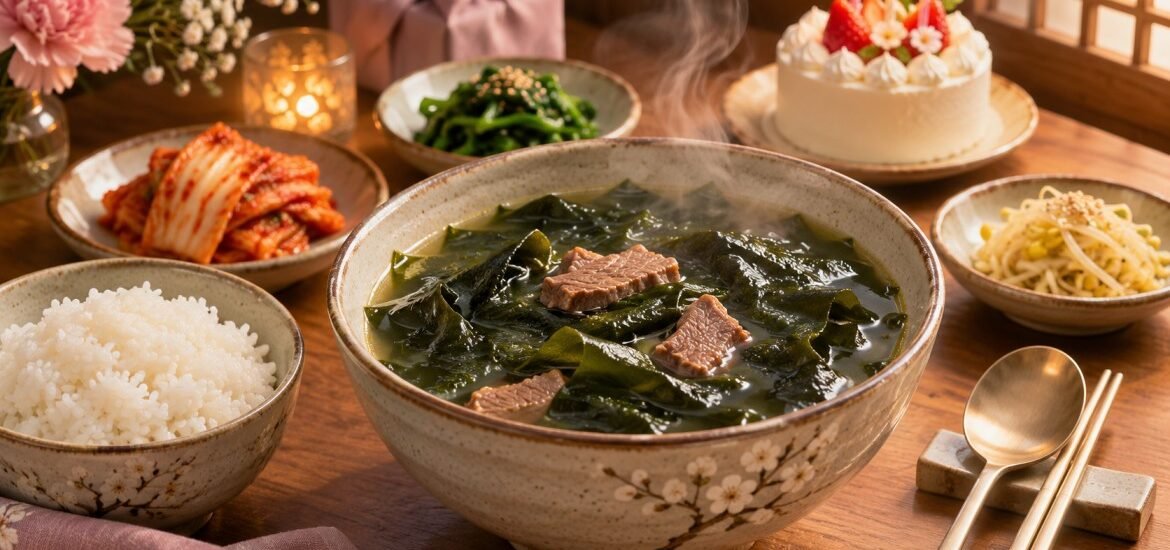
Birthdays around the world are usually associated with cake, candles and special meals. In Korea, however, there is another dish that carries a much deeper meaning: miyeokguk, or Korean seaweed soup.
For many Koreans, a birthday does not feel complete without a warm bowl of this comforting soup.
That is why miyeokguk is one of the most meaningful examples of Korean birthday food.
Unlike a birthday cake, which celebrates the person having the birthday, miyeokguk also encourages people to remember the person who gave them life. The tradition is closely connected with mothers, childbirth and the idea of gratitude.
For Indian K-drama and K-food fans, understanding this tradition adds another layer to Korean cuisine. Korean food is not only about ramen, tteokbokki or fried chicken. Some dishes carry stories that have been passed through generations.
At Wang House Korean Street Food Café, this connection between Korean food and culture is part of what makes exploring K-food more interesting.
What Is Miyeokguk?
Miyeokguk literally means seaweed soup.
“Miyeok” refers to brown seaweed, while “guk” means soup.
The dish is usually prepared by soaking dried seaweed and simmering it in broth with ingredients such as sesame oil, soy sauce and garlic.
Traditional versions may contain beef. In Korea’s coastal regions, versions can also include shellfish or white fish. VisitKorea notes that beef broth is commonly used, while coastal preparations may include clams or fish. (VisitKorea)
This means the exact recipe can change from family to family.
What remains consistent is the cultural significance attached to the soup.
Why Do Koreans Eat Seaweed Soup on Birthdays?
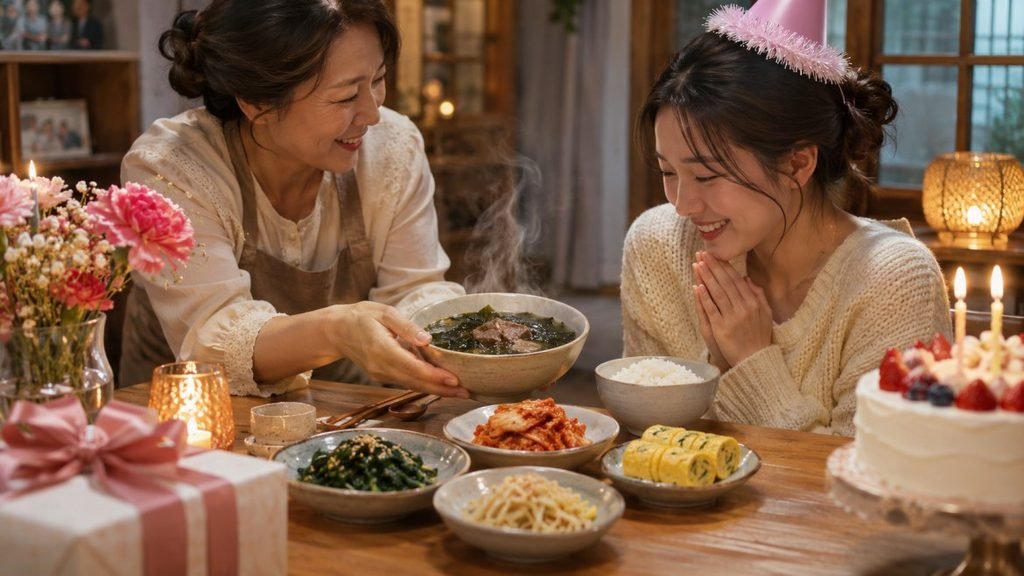
If you are wondering why Koreans eat seaweed soup on birthdays, the answer begins with childbirth.
Traditionally, Korean mothers have eaten miyeokguk after giving birth.
Seaweed soup became associated with postpartum recovery, and over time it also became connected with the child’s birthday.
So when Koreans eat miyeokguk on their birthday, the meal is not only about celebrating another year of life.
It can also be a reminder of their mother’s effort, love and sacrifice during childbirth.
Korea Tourism Organization describes the custom as a symbolic tradition that honours mothers, while Korea.net explains that serving the soup on birthdays reminds people of their mother’s love and devotion. (Korea.net)
That gives Korean birthday food a meaning very different from an ordinary celebration meal.
Miyeokguk Is Connected to Birth Before Birthdays
The tradition makes more sense when we understand the role miyeokguk has historically played after childbirth.
Seaweed has long been eaten by mothers during postpartum recovery in Korea.
That created a strong cultural relationship between miyeokguk, motherhood and birth.
Later, eating the same soup on birthdays became a way to remember that connection.
The birthday therefore becomes not only a celebration of the individual but also a moment to appreciate the person who brought them into the world.
This is one reason traditional Korean birthday food often feels emotional rather than extravagant.
It is simple, warm and deeply personal.
Miyeokguk in Korean Dramas
K-drama fans may already recognise miyeokguk without knowing its full meaning.
Birthday scenes often include someone preparing seaweed soup for another person.
Sometimes a parent makes it for a child.
Sometimes a partner prepares it.
Sometimes a character cooks it alone.
The emotional meaning changes according to the scene.
Korea Tourism Organization notes that miyeokguk has appeared in Korean dramas and that preparing it for someone can represent warmth and care, while eating it alone can sometimes be used to communicate loneliness.
Once you understand the tradition, those K-drama scenes become much more meaningful.
The soup is not simply a prop.
It tells you something about the relationship between the characters.
What Does Miyeokguk Taste Like?
People seeing dark green seaweed soup for the first time sometimes expect an extremely strong or spicy flavour.
Miyeokguk is usually quite different.
Compared with tteokbokki, spicy ramen or kimchi-based soups, Korean seaweed soup tends to be gentler and more comforting.
The seaweed creates an earthy, savoury flavour while sesame oil adds aroma.
Beef, seafood or other broth ingredients can make it richer depending on the recipe.
The soup is commonly eaten with rice, creating a simple and comforting meal.
For someone exploring Korean cuisine for the first time, miyeokguk shows that Korean food is not always fiery red and intensely spicy.
Is Miyeokguk Vegetarian?
Not always.
This is an important point, particularly for Indian diners.
Seaweed itself is plant-based, but traditional miyeokguk may use beef broth, beef, clams, fish or other seafood ingredients.
Therefore, vegetarians should not assume that every bowl of seaweed soup is vegetarian simply because the main visible ingredient is seaweed.
Vegetarian versions can certainly be prepared using vegetable or mushroom-based broth, but diners should confirm with the restaurant.
For more guidance on vegetarian K-food choices, see the Wang House guide to Korean vegetarian food.
Miyeokguk vs Other Korean Soups
Korean cuisine has many different soup and stew styles.
Kimchi-based soups tend to be tangier and more strongly flavoured.
Mandu soup contains Korean dumplings and usually feels more substantial.
Chicken soup has a milder, familiar comfort-food character.
Miyeokguk stands apart because of its seaweed base and its cultural connection with birthdays and mothers.
At Wang House, Korean soup options have included Miyeok Soup alongside other comforting Korean-style soups. Availability can vary by outlet, so customers looking specifically for miyeokguk should confirm before visiting.
You can explore the latest options through the Wang House Korean food menu.
Korean Birthday Food in Delhi
Korean food culture has become increasingly visible across Delhi.
People are not only interested in trying popular dishes such as ramen or tteokbokki. Many K-drama and K-pop fans also want to understand the stories and traditions behind Korean food.
This is where dishes such as miyeokguk become particularly interesting.
For people searching for Korean birthday food in Delhi, a Korean café visit can turn a regular birthday meal into something more connected with Korean culture.
Wang House currently has café locations in East and West Delhi.
You can find the latest addresses through the official Wang House café locations.
Korean Birthday Food in Laxmi Nagar and East Delhi
For customers around Laxmi Nagar, Preet Vihar, Nirman Vihar, Karkardooma, Patparganj and East Delhi, Wang House Laxmi Nagar provides an accessible place to explore Korean food.
The café is located close to Laxmi Nagar Metro.
For a Korean-inspired birthday meal, customers can build the experience around more than just one dish.
A warm soup can start the meal.
Gimbap or mandu can be shared.
Ramen, bibimbap or tteokbokki can become the main course.
Then boba or another café drink can finish the celebration.
For a broader overview of the outlet’s food choices, you can also read the Korean food café menu guide for Laxmi Nagar.
Korean Birthday Food in NSP and Pitampura
West Delhi customers can plan a similar K-food experience around NSP, Pitampura and Netaji Subhash Place.
Wang House’s NSP café is located at Aggarwal Metro Heights near Netaji Subhash Place Metro.
That makes it relevant for customers travelling from Pitampura, Rohini, Shalimar Bagh, Kohat Enclave and nearby West Delhi areas.
A Korean-inspired birthday does not necessarily need a large party.
A small group sharing Korean food can work just as well.
You could start with soup, order gimbap or mandu for the table and then let everyone choose between ramen, bibimbap, tteokbokki or other favourites.
The cultural story behind miyeokguk can also make the meal feel more meaningful than simply choosing another birthday restaurant.
Korean Birthday Food in Delhi NCR
For customers coming from Noida, Ghaziabad and other parts of Delhi NCR, choosing the nearest outlet can make a Korean birthday plan much easier.
East Delhi may be more practical for people travelling from Ghaziabad or Noida, while NSP and Pitampura can work better for North and West Delhi.
This local convenience matters when planning a group celebration.
The goal is not necessarily to recreate an elaborate Korean birthday party.
It can simply be about experiencing one or two Korean traditions while enjoying food together.
Korean Birthday Food in Kochi, Kerala
Korean food culture has also grown beyond Delhi.
Wang House currently lists a café in Panampilly Nagar, Kochi, near Panampilly Nagar Central Park.
For K-food fans around Kochi, Ernakulam, Kadavanthra and nearby areas, this creates another option for planning a Korean-inspired birthday meal.
The idea can be especially interesting for K-drama fans who have seen birthday miyeokguk scenes but never understood why the soup was being served.
Trying the food while knowing the story behind it changes the experience.
It becomes culture you can actually taste.
Korean Birthday Food in Calicut / Kozhikode
Wang House also currently lists a café on PT Usha Road in Calicut, Kerala.
For customers searching for Korean food in Calicut, Kozhikode and nearby parts of Kerala, a Korean-inspired birthday meal can offer something different from the usual restaurant celebration.
You can combine Korean comfort food with a café setting, share several dishes and introduce friends to the meaning behind Korean birthday traditions.
For people interested in how Korean café culture fits into everyday Korean lifestyle, Wang House also explores Seoul café culture and café hopping.
How to Plan a Korean-Inspired Birthday Meal
You do not need to follow every Korean tradition perfectly.
Instead, use the cultural idea as inspiration.
Begin with miyeokguk if it is available.
Add rice or bibimbap for a complete meal.
Share gimbap, mandu or tteokbokki with friends.
Finish with drinks and birthday cake if you want to combine Korean and Indian celebration styles.
The result can feel both familiar and new.
If you are curious about other regional dishes and the stories behind Korean cuisine, explore Wang House’s guide to regional Korean food.
Korean Food Is Often About Meaning as Much as Flavour
One of the most interesting things about exploring Korean cuisine is discovering that certain dishes are connected to particular moments in life.
Miyeokguk is connected with childbirth and birthdays.
Tteokguk is traditionally associated with the Korean New Year.
Other foods are connected with festivals, family gatherings or regional identity.
Understanding these connections helps K-food fans move beyond simply asking, “Does it taste good?”
The more interesting question becomes:
Why do people eat this dish?
That is where food becomes culture.
Final Thoughts
Miyeokguk may look like a simple bowl of seaweed soup, but its meaning makes it one of Korea’s most recognisable cultural dishes.
As Korean birthday food, it connects celebration with gratitude.
It reminds people of birth, motherhood, family and the care involved in bringing someone into the world.
That is why Koreans have continued eating miyeokguk on birthdays across generations.
For K-food lovers in Delhi, Delhi NCR, Laxmi Nagar, NSP, Pitampura, Rohini, Shalimar Bagh, Kochi, Panampilly Nagar, Ernakulam, Calicut and Kozhikode, exploring dishes like miyeokguk offers a chance to experience more than Korean flavours.
You also get to understand the stories behind them.
And sometimes, the most meaningful birthday meal is not the biggest one.
It is simply a warm bowl of soup that reminds you where your story began.